Friday, October 28, 2005

Fixing, festivals and prejudice

Fixing

Well, just some information about the blog first. Finally I changed the encoding from Shift-JIS to Unicode UTF-8. Hope that way Japanese characters and Portuguese accented characters will be able to coexist. Don't even remember why I chose Shift-JIS in first place...

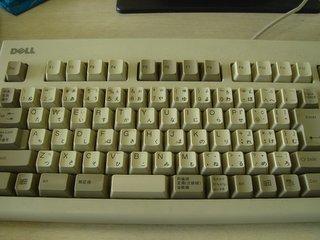
Em bom português, agora os acentos finalmente vão aparecer. Algumas pessoas que postam comentários usam eles, e por causa da codificação o texto estava aparecendo truncado. E essa codificação também permite caracteres em 日本語. Mesmo assim, acredito que vá continuar os posts em português sem acentuação. O meu teclado, como a foto abaixo mostra, é em estilo japonês (observe, por exemplo, a localização da arroba... se é que dá pra ver isso na figura) e, apesar de ter configurado a teclado em português (brasileiro), quando mudo a configuração as teclas são configuradas pro formato do teclado brasileiro... só que no teclado japonês.


Então, por exemplo, no teclado japonês, o início de parênteses é feito com shift+8 e mudando pra português passa a shift+9. E esse tipo de coisa eu tenho que simplesmente lembrar. No começo tudo bem, já que estava mesmo acostumado com teclado brasileiro, mas agora já estou me acostumando com o teclado japonês e é irritante toda hora errar o símbolo que se quer colocar.

Festivals

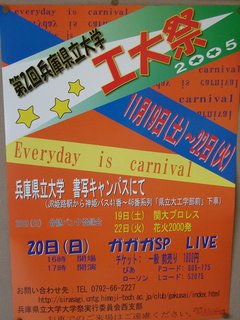
Walking around the university, I noticed some advertisements for the university festival from November 19th to 22nd. Here's a picture.


Good chance to check what a university festival looks like. Just seems a little long... I wonder if there'll be events everyday... And another thing that caught my eye was the slogan "everyday is carnival". (Impossible not noticing it, right?) Not for any strong reason, though. I just remembered a situation with my Japanese teacher when I was telling some impressions about Japanese festivals such as the Kenka Matsuri and she said that's more a less the same impression that some Japanese have about Brazil's carnival (carnaval)...

Prejudice

And I was reading some posts at Claus's blog (for a change... I think I should stop always mentioning his posts... but the topics are interesting) about Brazilian Immigrants in Japan. It has a link to an article which "explains somthings about Japanese immigration and emmigration" and have a story about prejudice against foreigners. Quite an intersting one, especially for those who believe that there's no prejudice in Japan and all Japanese will recieve foreigners with open arms (don't laugh... I've met someone like that already...). Brazil also has its amount of prejudice anyway... and in the disguised form that I believe is one of the worst...

This time I'm not posting an direct link to the article, though. Check his site for the link if you'd like to read it.

Thursday, October 27, 2005

Cherry

That one happened a little before first term (semester) exams. I was with some Japanese friends at the university's cafeteria. As usual, they were talking among themselves about many things that I couldn't understand completely, but I was participating the conversation as much as I could (which wasn't that hard since one guy occasionally asks me something about Brazilian "culture").

As the topic turned out to girls (and they were all male engineering students), they started to have more interest in inquring me. Well, asking the gaijin about girls wasn't that surprising, especially after one of them mentioned his view of Brazilian girls... Sexy. But the first question they asked completely floored me.

"Are you cherry?" Exactly like that... in English.

Now what question is that? After thinking for a while I gave up and supposed that was a meaning for cherry that I didn't know and that acually existed, so I searched for that word in my electronic dictionary (it saved me more times than I can count). No matching meaning in Oxford. I asked for more explanations and they told not to say that word aloud... Hum... dirty word?

I asked one of they to type it on the dic and he went to the Jap-Eng dictionary. Nice... Katakana-go (Japanese words created from foreign languages words such as "miruku" for milk). I know that some words have their meanings changed when turned to "katakana-go". He typed "cherii" and the result is really "cherry". But that dictionary also shows some synonyms and he wasn't satisfied with them. So, a word that has a meaning apart from dictionaries? Doesn't look good...

He then typed another word in Japanese (that I won't write) and then the meaning he wanted appeared. I looked at the English meaning and what was there...

...... Virgin.

?!?! Asking this before most common ones like "do you have/have you ever had a girlfiend?" or "Is there someone you like?"?! Usually the order of the questions asked reveals something... I don't want to know the meaning of that order, though.

Ah, and later they asked the "other questions" as well. Only the "first kiss" was missing (and, again, I don't want to know the meaning). And remember that we were at the cafeteria that, although wasn't crowded, was far from empty. They even demanded to point at one girl there who was more like "my type"... And some went to look at her closer later...Anyway, at the time I was surprised. But now, after seeing stranger things and listening to some stories from some friends who are teachers or other sources, it's not so surprising anymore. Just didn't know the "dark" meaning of "cherry" (and that Japanese could ask that kind of questions out of the blue)... Wonder how the original meaning was distorted... Might it be related with the Japanese cherry blossom (sakura in Japanese)? Besides, there's a music called "Sakuranbo" (the original Japanese word for "cherry"). If we put that meaning in the music...

Monday, October 24, 2005

灘のけんか祭り - Nada Kenka Matsuri


I just love how travellers' guides sometimes softens the truth... The Nada Kenka Matsuri is the most famous festival in Himeji (and the biggest kenka matsuri in Japan), so I just had to go check that out, right? Searching for some information before going I noticed something written on my guide:

"Kenka Matsuri (...): Portable shrines, shouldered by half-naked youths, jostle each other and the bearers vie to show their skill in balancing the shrines."

... Almost.

The festival was being held on October 14th and 15th, 2005. I was planning to go with some friends on 15th, but it rained a lot and the festival was postponed. So, we went to the festival on October 16th.

Since it's a famous festival, obviously it was crowded... REALLY crowded. Thankfully Jon "attracted" (being "gaijin-looking" surely has some advantages...) a "senior citizen" who used to participate the festival and he acted as our "local guide" explaining somethings (like the height of the yatai, a.k.a. portable shrines, and the height of the temple's portal are related so that the upper part of the yatai must be removed when passing through the portal... Something like when people put off their caps to show respect.) and guiding us to the good spots. So we were able to see some interesting things of the festival, like the mikoshi fighting and climbing the hill.

Now some explanations. According to the Metropolis Tokyo web site, "Nada's fighting tradition harks back to the Edo period (1603-1867), when Japan's emperor dispatched an armada to the Korean Peninsula. The clashing and grinding actions of the yatai during the festival mimic those the sailors used to dislodge offensive crustaceans from their ships' hulls en route to battle."

So, usually the first day is dedicated to some rituals and preparations for the next day, when each village brings its yatai/mikoshi (yatai is the beautiful-looking one and it's not used in direct clashings. Mikoshi are simpler and often end up with some damage) and men carry it from one shrine to another, and there're some kind of "rings" in the way so they can "destroy" the other villages' mikoshi/yatai. (The yatai rarely even touch each other... it's more like one team breaking others' balance... but for the mikoshi it's real clashing.)

Since it's a shinto festival, it's somewhat anti-feministic. The festival itself emphasize machismo for the violence itself and for the fact that only men can participate. Women aren't even allowed to touch the shrines, flags and these kind of things (our "guide" invited Jon, Rezaur and me to try lifting the yatai, but not Silvia). Besides, with cigarettes and beer, some may turn violent. And another thing that makes me think... Drunk people carrying portable shrines with weight up to 3 tons?! No wonder this festival is classified as having a certain hazard level... I heard that in some years there're even some deaths... Didn't noticed any, fortunately...

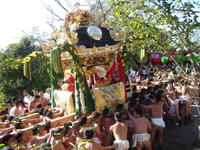
Ah... and another thing that is noticeable from the pictures is that people carrying the yatai/mikoshi wear mawashi (that sumo wrestler's "belt"). This website says that there's something related about strenght/stamina and nakedness (I really don't see the relation... neither the person who wrote that site...)... Yeah... that's strange...

More information in the following web sites:
Nada Kenka Matsuri Information in English
姫路・松原八幡神社-灘のけんか祭り

More Misc

Almost a week without any posts... hum...

Ah,well. Last week was pretty busy anyway. Classes all the week and a festival in the weekend (Aboshi Matsuri... I'll try to post comments about that soon...). Japan is full of festivals in autumn (fall)... most of them have their roots in rituals/partys/etc. to thank gods for a good harvest (rice harvest is done during fall). Come to think about it, if that's the case, there're some strange ways to "thank" the gods... Fighting, for example. I'll write more details when commenting the festivals.

While I prepare the matsuri posts (and the "Reminiscences" series), some other links with opinions and news.

"Weapon geeks in Japan aim for more firepower" - I' ve read about the referendum in Brasil about prohibiting the sale of guns and ammunition. And I guess the final result rejected that, right? This article is then a little late, but it shows an interesting thing about how "legal" weapons can be modified and become more powerful... And how people seek that. So, in the end, although Japan is a "country where citzens aren't allowed to have deadly guns" the reality may be a little different...

"M6.2 Hits Kanto, Tohoku" - Actually, this is old news already. This earthquake happened some days ago. This is just to put something to the people who wonders about earthquakes in Japan. And this year, it seems like most of natural disasters (typhoons and earthquakes) are striking the Kanto region... And I was told that they really don't strike often in Kansai (I'm liking this place more and more...), although things like the Great Hanshin Earthquake reminds me that this region is not completely safe. However, so far I haven't experienced such things... yet.

"Best to dig deep and study a language from its roots" "Learning a language is a cultural journey, too" - Just some interesting articles about language learning, and focusing a bit Japanese learning foreign languages. The interesting point is asking why learn a foreign language...

"Aso calls Japan 'one race' nation" - I saw this one at Claus's blog (again...). "Aso described Japan as having 'one nation, one civilization, one language, one culture and one race. It is nowhere else in other nations'"... Yeah, sure... Are we talking about the same Japan? Anyway, I'll even avoid commenting this one too much...

Tuesday, October 18, 2005

Reminiscences - 京都 (Kyoto)

Volta aos posta em portugues e as viagens de verao. Depois de Nara, o proximo destino nas ferias de verao foi Kyoto (15 a 17 de agosto de 2005).


Kyoto foi fundada em 794, inspirada na cidade chinesa Tang de Chang-an. Ostentou a posicao de capital do Japao durante o periodo Edo, quando a balanca do poder passou para Edo (atual Tokyo). Apesar de nao possuir a vitalidade economica de Tokyo ou Osaka, Kyoto eh famosa por sua cozinha (kyo-ryori) e diversos monumentos e jardins que acompanham as mudancas sazonais.

A ida foi direto de Nara com a Silvia. Kyoto eh praticamente um polo turistico, com muitos lugares a visitar. Assim, a viagem foi dividida em tres dias, com companhias diferentes.

No primeiro dia, junto com uma bolsista brasileira, fomos ver alguns pontos na area noroeste.

  • Kinkaku-ji: O classico "Pavilhao Dourado". Um dos principais cartoes postais de Kyoto. Construido por Ashikaga Yoshimitsu (nome no estilo japones. Sobrenome primeiro), que aos 37 anos abriu mao de seus deveres oficiais (mas nao de seu poder) para dedicar-se ao sacerdocio. O pavilhao eh uma replica exata do original, destuido por um incendio criminoso em 1950, totalmente folheada a ouro e encimada por uma fenix de bronze. Estranhamente nao se pode chegar perto da estrutura ^ ^;
  • Ryoan-ji: Construido em 1450, o lugar ganhou fama com seu jardim de pedras, uma interessante composicao de cascalho branco e 15 pedras, considerado a definitiva expressao do zen-budismo.
  • Ninna-ji: O enorme portal Ninna-ji mantem a memoria de uma epoca que este templo, da seita Shingon, possuia um conjunto de 60 subtemplos. Vitimada por incendios, a obra ficou reduzida ao tamanho atual (que ainda leva duas horas para se fazer o circuito completo). O Kondo (salao principal) e a imagem Amida ainda sao tesouros nacionais do Japao. Nessa atracao, infelizmente estava quase na hora de fechar, entao conseguimos ver as estruturas apenas rapidamente.

As companhias do segundo dia foram um colega japones (cujo primeiro encontro foi meio estranho... Um dia o professor de Economia Industrial mencionou os "alunos estrangeiros" na classe e ele apareceu depois, falando que queria praticar um pouco de ingles com a gente... Huh?) e dois amigos dele. Dia dedicado a alguns pontos turisticos na area sudeste e sul.

  • Ginkaku-ji: Nome atual de Jisho-ji, tambem conhecido como Pavilhao de Prata e considerado uma obra prima em materia de jardinagem e paisagismo. Originalmente o templo serviu como refugio nas montanhas para o xogum Yoshimasa (1358-1408) que, em homenagem ao avo, que havia revestido Kinkaku-ji em ouro, pretendia cobrir o seu palacio de prata. A guerra de Onin frustrou o plano. Realmente, comparando ambos o pavilhao Kinkaku-ji eh mais impressionante, mas os "arredores" do Ginkaku-ji sao melhores...
  • Kiyomizu-dera: Por mais de 1000 anos, peregrinos tem subido as encostas para oferecer oracoes a imagem de 11 cabecas de Kannon e beber da fonte sagrada (kiyomizu quer dizer agua pura). O complexo como um todo eh impressionante, por exemplo a varanda do salao principal, construida sem pregos. Nos arredores existe um santuario dedicado a divindade do amor, e alguns amuletos nesse sentido estao a venda (nao, nao comprei nenhum desses...)
  • Nishi e Higashi Hongan-ji: O aspecto austero dos dois templos atesta o poder e popularidade da seita Jodo-Shinshu. A disposicao dos dois templos eh identica, refletindo a mesma origem. Cada um tem um enorme Goei-do (salao do fundador) e um alojamento menor Amida-do, para a imagem do Buda Amida. Infelizmente, algumas partes dos templos estavam em reformas na epoca.
  • Toji: Embora esse templo nao tenha a exuberancia de muitos templos de Kyoto, este impressiona por sua importancia historica. Seus Budas tem observado a cuidado da cidade desde que Kukai fundou o templo em 796, sendo o local de onde os fundamentos religiosos da cidade surgiram. O pagode de cinco andares de Toji abriga as imagens de quatro Budas e seus seguidores (mas nao se pode entrar no pagode para ver). Com 55m, eh a estrutura de madeira mais alta do Japao.

Bom, nesse dia ainda fomos ate um restaurante brasileiro (churrascaria) em Kyoto, que o colega japones achou na internet. Mesmo nao sendo exatamente a mesma coisa, deu pra matar saudade de carne de verdade e dar umas risadas vendo os japoneses que estavam numa churrascaria pela primeira vez. Se algum dia voces tiverem uma oportunidade dessas, vale a diversao... E quem disse que acabou? Ainda era o dia de um evento pos-Obon em Kyoto, o Daimonji. Nesse evento, grandes fogueiras nas colinas que circundam a cidade sao acesas, marcando o fim do Obon, e as fogueiras acesas fazem desenhos nas colinas como o kanji "dai" (o unico que conseguimos ver). Pena que dura pouco... as fogueiras ficam acesas por cerca de 15 ou 20 minutos apenas. Ao contrario do primeiro dia, quando voltei pra Himeji, nesse dia fiquei na casa da familia desse japones, que sao de Kyoto (apesar de nao ser na regiao central)... uma mini experiencia de Home Stay, falando coisas do Brasil e afins...

Terceiro e (meu) ultimo dia. Dedicado a pontos turisticos variados que ainda nao tinham sido visitados.

  • Nijo-jo: Com poucas das fortificacoes importantes de outros castelos do Japao, Nijo eh mais conhecido pelos interiores ornados e pisos rouxinol. estes foram projetados para que, quando alguem pisasse, reproduzissem o som do passaro, avisando sobre possiveis intrusos. O castelo foi criado pelo xogum Tokugawa Ieyasu (1543-1616) como simbolo de poder e riqueza do recem-instalado xogunato em Edo.
  • Parque Imperial (Kyoto Gyoen): Com seus majestosos pinheiros e lindas vistas eh um verdadeiro oasis no coracao da cidade. Aqui se encontram o Kyoto Gyosho (Palacio Imperial) e Sento Gyosho (Palacio do Imperador Aposentado), mas cuja visitacao deve ser agendada previamente. O que, em bom portugues, quer dizer que nao entramos nesses lugares...

E de vota a Himeji...

Ah, sim. No caso de alguem ter notado uma foto estranha com garrafas PET (um tipo de plastico) entre as fotos de Kiyomizu-dera, essa foto deve-se ao fato de eu ter lido este artigo na epoca... E coincidentemente eu encontro um caso dessa estranha supersticao...